Johannesburg’s latest mine raid produced a big number, a hard image, and a convenient culprit. Two hundred and seventeen people were arrested at a gold shaft west of the city, weapons and ammunition were seized, and officials made sure everyone heard that more than 100 of those detained were undocumented foreign nationals.
That detail will travel faster than the rest of the story. It always does. The state gets to look decisive, the public gets a familiar explanation, and the harder questions about abandoned mines, joblessness, corruption, and the machinery behind illegal mining get pushed further down the road.
The raid and the story being sold
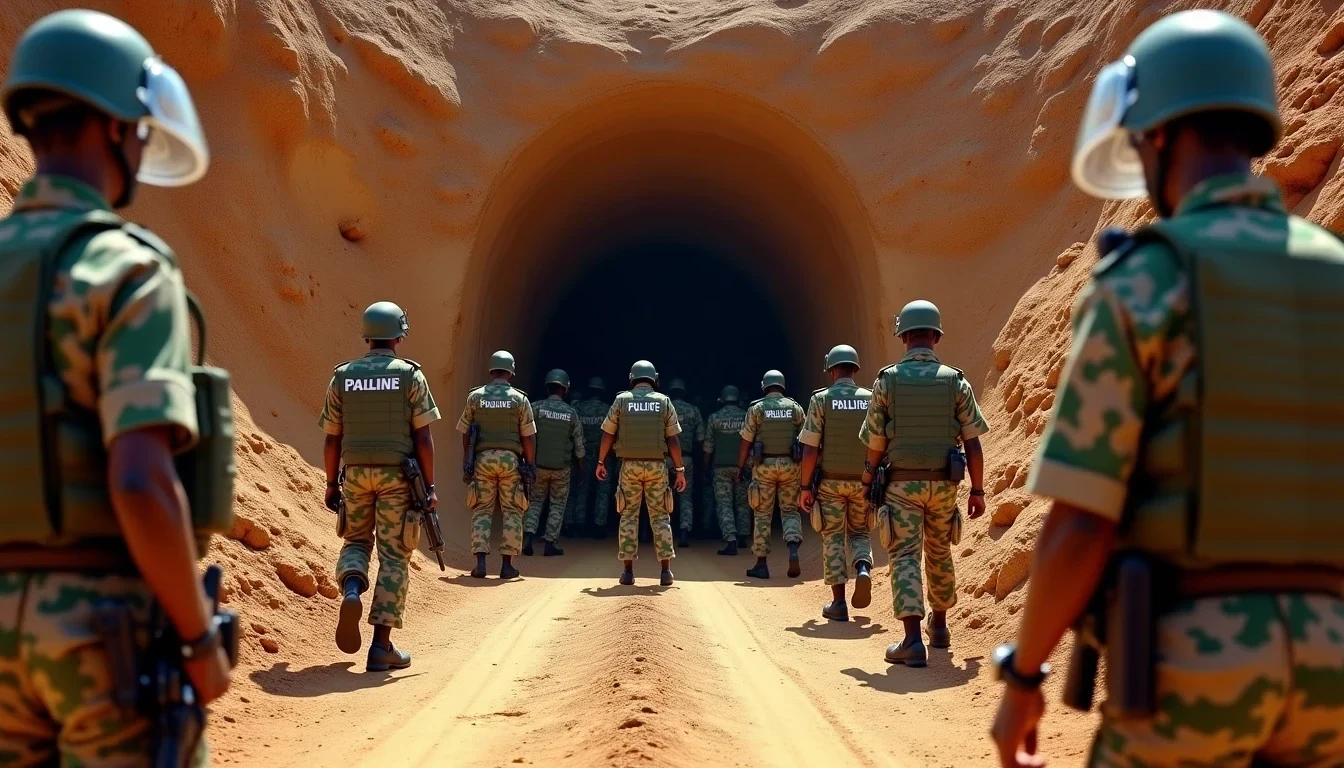
Police and soldiers moved on a shaft outside Johannesburg under Operation Prosper, the security drive President Cyril Ramaphosa has tied to his warning that organised crime is the country’s most immediate threat. The number of troops alone tells you this was never pitched as a routine policing action. About 2,200 soldiers were deployed alongside police, a blunt instrument by any standard.
The haul was predictable in the way these raids tend to be. Security forces said they recovered ammunition, weapons, and mining equipment. They also said the majority of those arrested were undocumented foreign nationals, with people from Lesotho, Mozambique, and Zimbabwe making up a large share of the group.
That last part is the line that will shape public reaction. It is the part most people will remember, but it does the least explanatory work if you actually want to understand illegal mining near Johannesburg.
The visible workers are not the whole system
The man underground with a shovel, a sack, and a gun nearby is not the mastermind of anything. He is usually the disposable layer at the bottom of a trade built to survive on desperation. Illegal mining in South Africa has become a layered criminal economy. Syndicates control access, transport, protection, processing, and resale. Former mine workers, fixers, corrupt officials, armed crews, and brokers move the gold once it comes up.
The people arrested in this raid are the visible face of the business because they are the easiest part to catch and the easiest part to blame.
The politics gets ugly here. Once arrests are described mainly through the nationality of the detainees, the public conversation slides from crime to migration, from syndicates to border panic. The grammar of the story changes. The structure of the trade disappears behind the easier target.
Why foreign nationals end up there
Undocumented migrants keep turning up in these operations because poverty, weak borders, and a stripped-down labour market leave huge numbers of people with almost no decent options. Foreignness itself does not cause illegal mining.
Lesotho, Mozambique, and Zimbabwe have all pushed workers into South Africa for years, not because the work here is safe or legal, but because the alternative is often worse. The underground economy offers danger, extortion, injury, and arrest. It also offers cash, which is enough to make desperation do the rest.
That is the part the headline leaves out. A crackdown can remove miners from a shaft, but it does nothing to answer why the shaft was worth entering in the first place. It does nothing to explain why abandoned mines remain open for illegal access. It does nothing to explain why so many men are prepared to risk collapse, violence, and disease for a few rand at the bottom of the chain.
In that sense, the raid is both real and incomplete. Illegal mining is violent, criminal, and destructive. But the state keeps reaching for the same theatrical response without fixing the conditions that keep feeding the trade.
What the crackdown hides
Illegal mining is not a victimless side hustle gone wrong. It wrecks land, poisons water, destabilises ground, and turns old shafts into death traps. It also drags crime into surrounding communities. Turf fights, extortion, trafficking, and armed intimidation are part of the business model.
The national cost is just as plain. Every ounce of illicit gold taken from a shaft is money that never reaches tax collectors, royalties, or the formal economy. The state loses revenue. Legitimate operators lose ground. Residents near old mining areas live with damage they never agreed to carry.
Yet the political story gets flattened into a border story because that is easier to sell. It lets officials sound tough. It lets commentators sound alarmed. It lets the public point at the nearest outsider and call that analysis.
South Africa has been here before. Foreign nationals are repeatedly made to stand in for broader failures, whether the topic is crime, unemployment, service delivery, or pressure on township life. Illegal mining fits that pattern neatly because the workers underground are often foreign, poor, and out of sight. They make a clean target. They also make a useful distraction.
Operation Prosper is a forceful response, not a solution
Ramaphosa’s framing of organised crime as the main threat is not wrong. The syndicates are real. The weaponry is real. The control networks are real. A raid that pulls ammunition and equipment out of a shaft is not theatre, and no serious person should pretend otherwise.
But a state can be accurate and lazy at the same time. That is the danger here. Operation Prosper may disrupt one site west of Johannesburg. It may seize gear, clear a shaft, and produce a strong news cycle. It will not, on its own, deal with the thousands of derelict and ownerless mines that keep offering criminals a route back in. It will not create legal work for the people pushed into the trade. It will not clean up the corruption that helps these networks breathe.
The harder fix is slower and less dramatic. Seal and rehabilitate abandoned shafts. Tackle the syndicates rather than only the labourers. Create lawful ways for small-scale miners to work. Build real economic alternatives in the places that keep feeding this underground economy. Anything less is just another round of arrests followed by another round of outrage.
The raid near Johannesburg tells us something useful, but not flattering. The state knows how to stage force. It is still much less comfortable dealing with the conditions that make force necessary.